All mocks

Mock Exam

Mock Exam 1

First full-format mock — Modules 1–4

180 min·After Module 4 (Lesson 16)

Your first full-format mock. Sit it under exam conditions: no notes, strict timing.

Reading & Use of English

Each part below is a sample. Sit them in order, no notes.

Part 1 — Multiple-choice cloze

Streaming services have completely (1) ____ the way families watch television. Where there was once a single screen in the living room, there are now several, each (2) ____ to a different person's taste. According to a recent study, the average household (3) ____ to more than four services, though many subscribers couldn't (4) ____ what they pay each month. Companies have responded by (5) ____ shared family plans, and by quietly (6) ____ the price every few months. For some viewers, the choice feels (7) ____; for others, it's a relief never to (8) ____ with what's on tonight.

  1. 1. A changedB variedC swappedD moved
  2. 2. A matchedB tunedC fittedD linked
  3. 3. A subscribesB joinsC signsD agrees
  4. 4. A tellB sayC speakD talk
  5. 5. A puttingB givingC doingD offering
  6. 6. A liftingB raisingC growingD climbing
  7. 7. A overwhelmingB overbearingC overflowingD overcoming
  8. 8. A chooseB settleC manageD deal

Part 5 — Reading: multiple choice

The five-minute museum

When the city's biggest museum announced a five-minute audio guide aimed at busy commuters, the reaction online was savage. Critics accused the curators of 'cheapening' art, of giving in to short attention spans, of failing the very mission museums exist for. Six months on, the guide has been downloaded more than a million times — and, more surprisingly, average visit length has actually risen. The lead curator believes the explanation is simple: visitors who once felt intimidated by long, scholarly tours now arrive with a confident starting point. From there, many drift into the longer rooms instead of leaving early. The lesson, she argues, is not that depth is dead, but that depth without an entrance is invisible.

  1. 1. What was the initial public response to the five-minute guide?

    • A enthusiastic
    • B hostile
    • C indifferent
  2. 2. What unexpectedly happened after the guide launched?

    • A People left the museum more quickly.
    • B People spent longer inside the museum.
    • C People stopped using the longer tours.
  3. 3. The phrase 'depth without an entrance is invisible' suggests…

    • A long tours are no longer useful.
    • B detailed content needs an accessible starting point.
    • C museums should focus only on beginners.

Writing

Two tasks. Part 1 is compulsory; choose one Part 2 option.

Part 1·Essay (compulsory)·140–190 words

In your English class you have been discussing this statement: 'People should be encouraged to spend less time on their phones.'

Write an essay using all the notes and giving reasons for your point of view.

  • health
  • relationships
  • (your own idea)

Part 2 — choose one

Part 2·Article·140–190 words

An English-language magazine for travellers wants articles.

Write an article about a journey you really enjoyed and explain what made it special.

Part 2·Review·140–190 words

You see this notice in an online magazine.

Write a review of a film you watched recently. Explain what it was about and whether you would recommend it.

Part 2·Email·140–190 words

You receive an email from your English-speaking friend Sam asking about your new neighbourhood.

Reply to Sam. Describe what your neighbourhood is like and what there is to do there.

Listening

Each part is played twice. Transcripts visible in Teacher Mode.

Part 3 — Multiple matching

You will hear five short extracts in which different people talk about a recent career change. Choose from list A–H what each speaker says.

  • A. It happened by accident.
  • B. A friend convinced me.
  • C. I planned it for years.
  • D. I needed more flexibility.
  • E. The pay was the main reason.
  • F. I wanted a complete change of pace.
  • G. It was a family decision.
  • H. I never expected it to last.
  1. Speaker 1

    Woman, mid-30s, former lawyer

    Speaker 1 audio

    Tap play to listen. Drag the timeline to jump anywhere.

  2. Speaker 2

    Man, late 40s, ex-engineer

    Speaker 2 audio

    Tap play to listen. Drag the timeline to jump anywhere.

  3. Speaker 3

    Woman, 50s, former teacher

    Speaker 3 audio

    Tap play to listen. Drag the timeline to jump anywhere.

  4. Speaker 4

    Man, 30s, ex-banker

    Speaker 4 audio

    Tap play to listen. Drag the timeline to jump anywhere.

  5. Speaker 5

    Woman, 40s, former nurse

    Speaker 5 audio

    Tap play to listen. Drag the timeline to jump anywhere.

Speaking

Test in pairs of candidates; one examiner asks, one assesses.

Part 1 — Interview (2 min)

  1. Where are you from and how long have you lived there?
  2. What do you usually do at the weekend?
  3. Tell us about your work or studies.

Part 2 — Long turn (1 min each)

Candidate A

1 min long turn

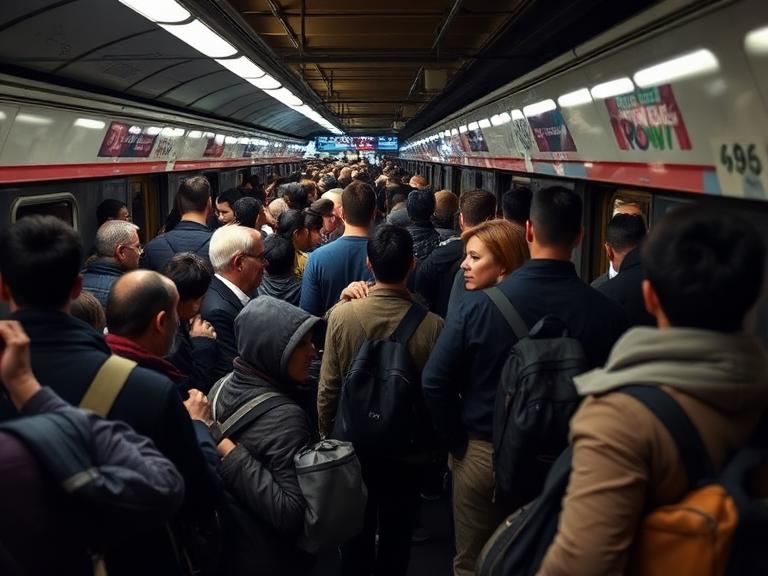
Compare the two photographs of people commuting to work.

Photo 1: people commuting to work
Photo 1
Photo 2: people commuting to work
Photo 2

Follow-up (other candidate, 30s): Which way of commuting would you prefer, and why?

Candidate B

1 min long turn

Compare the two photographs of people on holiday.

Photo 1: people on holiday
Photo 1
Photo 2: people on holiday
Photo 2

Follow-up (other candidate, 30s): Why might these people have chosen these kinds of holiday?

Part 3 — Collaborative task (2 + 1 min)

Examiner prompt sheet

How useful are these things when learning a new language?

watching films
speaking to natives
using an app
reading books
taking a class

Now decide which two are the most useful for a busy adult.

Part 4 — Discussion (4 min)

  1. Is it better to learn a language as a child or as an adult? Why?
  2. Do you think apps will replace language teachers? Why?