All mocks

Final Simulation

Final FCE Simulation

Full Cambridge B2 First — exam-day conditions

220 min·After Lesson 40

This is the dress rehearsal. Treat every paper exactly as you will on exam day.

Reading & Use of English

Each part below is a sample. Sit them in order, no notes.

Part 1 — Multiple-choice cloze

For most of the twentieth century, photography was a (1) ____ activity, requiring expensive film and patient development. The arrival of the smartphone (2) ____ all that, putting a capable camera in almost every pocket. Today we (3) ____ more images in a single weekend than entire families used to take in a lifetime. Yet many photographers argue that abundance has (4) ____ with it a strange kind of forgetfulness: pictures are taken, posted and almost immediately (5) ____. To (6) ____ this, a small but growing movement is going back to printed albums, choosing (7) ____ to keep over thousands to scroll past. Whether this is nostalgia or wisdom (8) ____ on who you ask.

  1. 1. A specialistB specialisedC specialD specific
  2. 2. A alteredB changedC amendedD varied
  3. 3. A catchB shootC takeD grab
  4. 4. A broughtB carriedC liftedD delivered
  5. 5. A lostB missedC droppedD forgotten
  6. 6. A counterB answerC replyD object
  7. 7. A fewB littleC smallD tiny
  8. 8. A dependsB restsC liesD stands

Part 2 — Open cloze

Despite (1) ____ widely predicted, the printed book has refused to disappear. Sales (2) ____ been falling for years, but the decline stopped in 2017 and has even reversed in some markets. Readers, it turns out, (3) ____ not as monolithic as publishers feared. (4) ____ are those who read almost exclusively on screens; (5) ____ are those who insist on paper. Most, however, switch between the two (6) ____ on what they're reading. What no one (7) ____ have foreseen is how strong the demand for physical books from younger readers (8) ____ become.

Part 5 — Reading: multiple choice

The end of the universal commute

For half a century, the morning rush hour was the unquestioned shape of working life. Trains, motorways and city buses were all designed around it, and so were the working hours of millions of people. Then, almost overnight, that shape broke. Hybrid working has not eliminated the commute, but it has fractured it: every day of the week now has a different rhythm, and the old peak is, in many cities, simply gone. Planners are scrambling to catch up. Some argue that the lost passenger numbers will eventually return; others believe the change is permanent and that infrastructure built for the universal commute will need to be radically rethought. What seems clear is that the assumption underpinning a century of urban planning — that everyone leaves home at the same time, in the same direction — is no longer safe.

  1. 1. What does the writer say has happened to the morning rush hour?

    • A It has disappeared entirely.
    • B It has become unpredictable across the week.
    • C It has shifted to a later time.
  2. 2. Planners are described as…

    • A confident the old patterns will return.
    • B divided about what comes next.
    • C unwilling to make changes.
  3. 3. The final sentence suggests…

    • A urban planning is in crisis.
    • B a long-held assumption no longer holds.
    • C city governments have failed.

Writing

Two tasks. Part 1 is compulsory; choose one Part 2 option.

Part 1·Essay (compulsory)·140–190 words

In your English class you have been discussing this statement: 'Schools should teach students how to manage their money.'

Write an essay using all the notes and giving reasons for your point of view.

  • future independence
  • debt
  • (your own idea)

Part 2 — choose one

Part 2·Article·140–190 words

An English-language magazine for adult learners.

Write an article about an experience that changed the way you see your career.

Part 2·Email·140–190 words

You receive an email from your English-speaking friend.

Reply with advice about moving abroad for work.

Part 2·Review·140–190 words

An English-language travel site asks readers for reviews.

Write a review of a hotel or restaurant you have visited recently.

Listening

Each part is played twice. Transcripts visible in Teacher Mode.

Part 1 — Short extracts (multiple choice)

  1. You hear two colleagues talking about a meeting.

    1. What do they agree about it?

    • A It overran.
    • B It lacked clear decisions.
    • C It was poorly prepared.

    Extract 1 audio

    Tap play to listen. Drag the timeline to jump anywhere.

  2. You hear a woman talking about a recipe.

    2. What does she suggest?

    • A halving the cooking time
    • B adding more salt
    • C substituting one ingredient

    Extract 2 audio

    Tap play to listen. Drag the timeline to jump anywhere.

Part 4 — Long interview (multiple choice)

You will hear an interview with a writer, Hannah Quinn, about her debut novel.

Part 4 audio

Tap play to listen. Drag the timeline to jump anywhere.

  1. 1. What does Hannah say about the writing process?

    • A She wrote quickly.
    • B She rewrote the opening many times.
    • C She co-wrote it with an editor.
  2. 2. She admits she was wrong about…

    • A her readers' age.
    • B the genre's popularity.
    • C the marketing budget.

Speaking

Test in pairs of candidates; one examiner asks, one assesses.

Part 1 — Interview (2 min)

  1. Where are you from?
  2. Tell us about a typical day for you.
  3. What are your plans for the next few years?

Part 2 — Long turn (1 min each)

Candidate A

1 min long turn

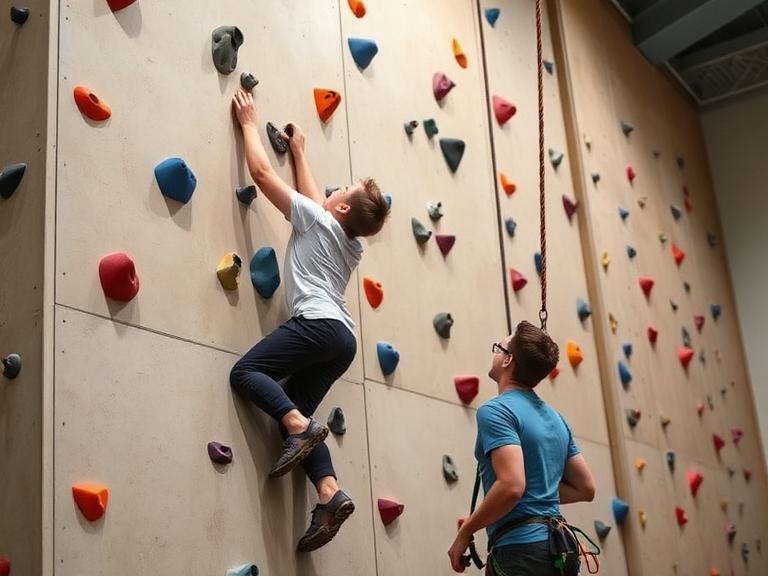
Compare these photographs of people facing new challenges.

Photo 1: people facing new challenges
Photo 1
Photo 2: people facing new challenges
Photo 2

Follow-up (other candidate, 30s): Which challenge would be hardest for you, and why?

Candidate B

1 min long turn

Compare these photographs of people celebrating success.

Photo 1: people celebrating success
Photo 1
Photo 2: people celebrating success
Photo 2

Follow-up (other candidate, 30s): Why might these moments be important to the people involved?

Part 3 — Collaborative task (2 + 1 min)

Examiner prompt sheet

What helps people most when they're starting out in life?

a good mentor
a strong network
financial support
luck
education

Now decide which two help most.

Part 4 — Discussion (4 min)

  1. Is success today different from what it was for your parents' generation? How?
  2. Do you think people put too much pressure on themselves?