
Module 2 · Use of English Core · Lesson 08
Speaking Part 2
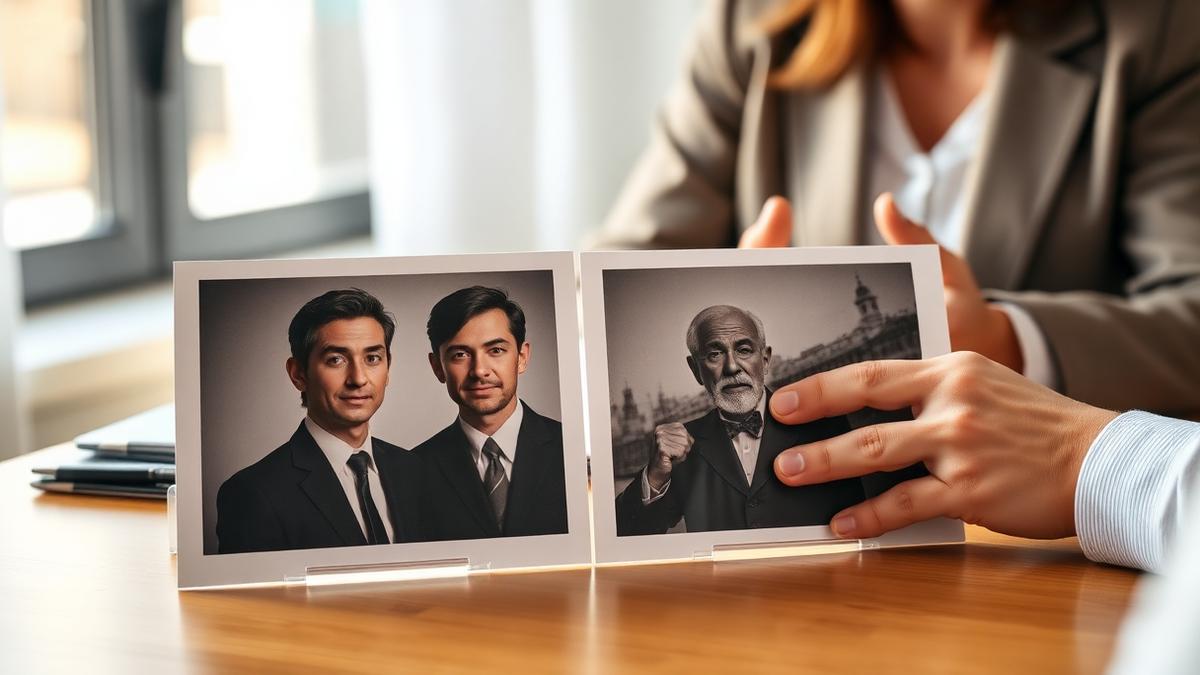
Compare two photos. Speak alone for 1 minute. Use a 4-move frame to compare, speculate and answer.
Get talking · Section 1
5 minPick any object on your desk. Talk about it for 60 seconds without stopping. Count your hesitations. Notice — that's the Part 2 challenge: keep going.
In pairs, list 3 things 'comparing' two photos does that 'describing' them does not.
Look at any image in the room (a poster, a screen). Speculate in 2 sentences about who took it and why. Use 'might', 'could', 'looks as if'.
Grammar focus · Section 2
8–10 minThe 4-move comparative frame
Upper-band candidates use the SAME 4-move frame every time. Move 1 (10 sec): GENERAL similarity — what both photos have in common. Move 2 (20 sec): KEY difference — one clear contrast, with comparative language.
Examples
→ Move 1: 'Both photos show people working, but in very different environments.'
→ Move 2: 'Whereas the first shows a busy open office, the second is a quiet home setting.'
→ Move 3: 'The woman in the first photo looks as if she's under pressure — she might be facing a deadline.'
→ Move 4: 'Personally, I think working alone, like the second person, would be more productive for me.'
→ Speculation modals (key): might / could / may / must / can't + base verb; looks as if / seems to be + clause/-ing.
Word bank — no clues, retrieve it
Question 1.How long do you speak alone in Speaking Part 2?
Question 2.Best opener for Move 1 (general similarity):
Question 3.Which is a comparative linker?
Question 4.Best speculation phrase:
Question 5.What does Move 4 do?
Quick check 1.The candidate's PARTNER speaks for…
Quick check 2.If you stop early at, say, 35 seconds, what should you do?
Vocabulary · Section 3
5–7 minWords & phrases to own
whereas
comparative linker showing contrast: 'whereas the first shows X, the second shows Y.'
Finish this out loud: "For me, whereas is …" — then give one reason.
on the other hand
second-half contrast: 'On the other hand, the second photo…'
Use "on the other hand" to talk about something that happened to you this year.
by contrast
formal contrast linker: 'By contrast, the woman in B…'
Finish this out loud: "For me, by contrast is …" — then give one reason.
both / neither
use to open a similarity: 'Both photos show…' / 'Neither person looks relaxed.'
Finish this out loud: "For me, both / neither is …" — then give one reason.
to look as if / look like
speculation: 'She looks as if she's enjoying it.' / 'It looks like a market.'
Say one true sentence about your own life using "to look as if / look like".
to seem to be + -ing
speculation: 'They seem to be celebrating something.'
Say one true sentence about your own life using "to seem to be + -ing".
might / could / may
speculation modals for possibility: 'He might be a teacher.'
Use "might / could / may" to talk about something that happened to you this year.
must / can't
speculation modals for certainty: 'They must be exhausted.' / 'She can't be his sister.'
Finish this out loud: "For me, must / can't is …" — then give one reason.
I'd imagine that
personalises speculation: 'I'd imagine that the second photo is in summer.'
Finish this out loud: "For me, I'd imagine that is …" — then give one reason.
personally, I think
answer-the-question phrase for Move 4.
Finish this out loud: "For me, personally, I think is …" — then give one reason.
Tap an item on the left, then tap its match on the right.
Pronunciation · Section 4
3–4 minLinking and chunking for fluency
Say it aloud
- • Both_of_these_photos / show_people_working. (two chunks)
- • Whereas_the_first / the_second_one. (two chunks)
- • She_looks_as_if / she_might_be / under_a_lot_of_pressure. (three chunks)
- • Personally / I'd_prefer_to_work_alone. (two chunks)
- • Practice with a stopwatch: 1 chunk = 1–2 seconds.
Reading · Section 5
8–10 minWhat examiners actually listen for
Read the passageTap to openTap to hide
It is tempting to assume that Speaking Part 2 rewards rich vocabulary and clever speculation, and that examiners are simply waiting to hear the longest, fanciest sentences a candidate can produce. They are not. Examiners listen for four very specific things — Grammar and Vocabulary, Discourse Management, Pronunciation, and Interactive Communication — and across all four, the strongest predictor of a good band is structure, not flair.
Discourse Management in particular is where the long turn lives. A candidate who comparatively organises the minute around the four-move frame (similarity → difference → speculation → answer) almost always scores higher than a candidate who tries to be 'natural' and ends up describing photo A for 30 seconds and photo B for 30 seconds. Examiners are trained to mark organisation, and an unorganised long turn is heard as exactly that, even if every individual sentence is well-formed.
The second mistake is treating Part 2 as a vocabulary test. Candidates load up on adjectives — 'bustling', 'serene', 'picturesque' — and forget to compare or speculate. The examiner has no box for 'fancy adjectives' on the mark scheme. What they DO have is a box for 'extends discourse beyond the simple description', and that box rewards the candidate who says 'she looks as if she might be a tour guide, given how attentive the group seems'.
Finally, the partner's 30-second follow-up matters. A short, focused answer that picks one of the situations and gives a personal reason scores higher than a long, vague one. 'Personally, the first situation looks more appealing to me, because I'd find the open space inspiring' is a strong 30-second answer.
For questions 1–3, choose the answer (A, B, C or D) which you think fits best according to the text.
1What is the strongest predictor of a good band, according to the text?
2Why does describing photo A then photo B fail?
3What does the mark scheme actually reward?
Sentences have been removed from the text. Choose from the sentences A–E the one which fits each gap (1–4). There is one extra sentence which you do not need to use.
Exam conditions: keep “Read the passage” closed while you do this task.
Listening · Section 6
8–10 minAn examiner and a candidate run a Speaking Part 2 (about 2:00)
Listening audio
Tap play to listen. Drag the timeline to jump anywhere.
Show transcript
Examiner:Now, I'd like you to compare the photos and say why you think the people might have chosen these two ways of spending their free time. You have a minute. All right?
Candidate (Lisa):Both photos show people enjoying their free time outdoors, but in very different ways. Whereas the first picture shows a group of friends hiking up a steep mountain trail, the second one shows a single person reading quietly in a hammock.
Candidate (Lisa):The hikers in the first photo look as if they're putting in a lot of effort — they might be on a long-distance trek, or perhaps a weekend challenge with friends. They could have chosen this because they enjoy testing themselves physically, and there's clearly a strong social element.
Candidate (Lisa):By contrast, the person in the second photo seems to be looking for the opposite — peace and quiet. I'd imagine that this kind of person spends the week in a busy job, and chooses a hammock and a book precisely because they want to switch off completely.
Candidate (Lisa):Personally, I'd probably go for the hike. I find it harder to switch off if I'm just lying down — I need to be moving to feel like I've really had a weekend.
Examiner:Thank you. And Marco, which of these ways of spending free time would you prefer?
Candidate (Marco):Honestly, I'd choose the second one. After a tiring week, I find that just sitting outside with a book recharges me far more than physical exercise. Don't get me wrong — I enjoy a walk now and then — but reading in a hammock sounds, frankly, perfect.
Question 1.Which Move 1 phrase does Lisa use?
Question 2.Which speculation phrase does Lisa use about the hikers?
Question 3.Which Move 4 phrase signals her personal opinion?
Question 4.Marco's 30-second answer scores well because it…
Exam skills · Section 7
5 minSpeaking Part 2 — the 4-move frame
🎯 Speaking Part 2
Compare two photos. Speak for 1 minute.
- Open with similarity
- Pivot to one key difference
- Speculate (might, could, looks as if)
- Answer the examiner's question
Start when ready.
Quick Tip
Stick to the 4-move frame every time — examiners reward structure over fancy adjectives.
Exam Hack
If you finish early, add one more speculation. Never stop before 60 seconds.
Common Mistake
Don't describe photo A then photo B — that's not a comparison.
Your task
Speak alone for ONE minute, comparing the photos and answering the question. Use the 4 moves in order. Never stop early.
Example
Photos: A — busy open-plan office. B — quiet home office. Q: Why might these people have chosen these workplaces? Move 1: 'Both photos show people working with computers, though in very different environments.' Move 2: 'Whereas the office in the first photo is busy and full of colleagues, the second shows someone working alone at home.' Move 3: 'The man in A looks as if he might enjoy the energy of a team. The woman in B seems to be more focused — I'd imagine that she finds the office too distracting.' Move 4: 'Personally, I'd probably choose the home office. I work better when it's quiet.'
Practice · Section 8
8–10 minFill in the blank
Question 1.Both photos ___ people enjoying their free time.
Question 2.___ the first picture shows a hike, the second shows someone reading.
Question 3.She ___ as if she's really focused.
Question 4.He ___ be a teacher — he's holding a marker.
Question 5.___ , I'd prefer the second option.
Question 6.By ___ , the woman in B is alone.
Q1.Move 1 opener (2 words): '___ photos show…'
Q2.Speculation modal for possibility (one word): 'She ___ be a tourist.'
Q3.Move 4 opener (one word + comma): '___, I'd prefer the first.'
Writing · Section 9
5 minPut it in writing
Your task
Pick two photos from your phone. Write the 4-move frame, then say it aloud against a 60-second timer.
Show model answer
Photos: my breakfast / my dinner yesterday. Move 1: Both photos show meals I had yesterday, but at very different times of the day. Move 2: Whereas the first is a quick, light breakfast — coffee and toast — the second is a longer, social dinner with my family. Move 3: The breakfast must have been eaten in a hurry — there's no plate, just a napkin. The dinner, on the other hand, looks as if it took a while to prepare, and I'd imagine the conversation went on long after the food. Move 4: Personally, I prefer the dinner. I'd rather eat less in the morning and make the evening meal the real event of the day.
Speaking · Section 10
10–15 minMake it a real conversation
Roleplay
Live Part-2 roleplay. A = candidate (1 min), B = partner (30 sec follow-up), C = examiner/timer. Use the FCE Exam Practice photos, then swap.
Useful phrases
- • Both photos show… but in very different ways.
- • Whereas the first…, the second…
- • By contrast, the second one…
- • She looks as if she might be…
- • I'd imagine that the people here are…
- • Personally, I'd probably choose…
Teacher notes
Optional · Teacher-led
Teacher Activities
Two extensions that drill the 4-move frame to automaticity. ~18 min total
FCE Exam Practice · Section 11
20–30 minReal FCE tasks
One authentic Speaking Part 2 set. Look at the two photos. The candidate speaks for 1 minute, then the partner answers the follow-up in about 30 seconds. Use the 4-move frame.


Examiner asks
"Compare the two photos and say why you think the people might have chosen to work in these different ways. You have one minute."
Comparative frame
- MOVE 1 (10s) — General similarity: 'Both photos show people working, but in very different environments.'
- MOVE 2 (20s) — Key difference: 'Whereas the first shows a busy open-plan office full of colleagues, the second shows someone working alone at home.'
- MOVE 3 (20s) — Speculation: 'The people in the first photo might enjoy the energy of a team — they look as if they're brainstorming. By contrast, the woman in the second photo seems to be more focused. I'd imagine she finds an office too distracting.'
- MOVE 4 (10s) — Personal answer: 'Personally, I think I'd choose to work from home — I work better when it's quiet.'
After 1 minute, examiner asks your partner
"Which of these working situations would you prefer? Why? (about 30 seconds)" (~30 seconds)
Useful language
- • Both photos show…
- • Whereas the first…, the second…
- • By contrast, …
- • The people in the first photo look as if they…
- • I'd imagine that the woman in B…
- • She might be / could be / must be…
- • Personally, I'd probably choose / prefer…
Sample long-turn answer
Both photos show people working with computers, but in very different environments. Whereas the first picture shows a busy open-plan office with several colleagues sharing the space, the second shows a single person working alone at a tidy home desk. The people in the first photo look as if they're enjoying the energy of working with others — they might be brainstorming a project, or perhaps starting a meeting. They could have chosen this kind of workplace because they value the social side of work. By contrast, the woman in the second photo seems to be far more focused, and I'd imagine that she has chosen to work from home precisely because she finds an office too distracting. Personally, I'd probably choose the home setup. I find I get much more done when it's quiet, even though I do miss the social contact sometimes.
Homework · Section 12
Take-homeTake it home
Speaking Part 2 — three full long turns
Record a 60-second response to each task using the 4-move frame.
4-MOVE FRAME —.
- 1frame both images ·
- 2describe each in 1 sentence ·
- 3compare + speculate ·
- 4answer the examiner's question. Time each turn at 60 seconds. Re-listen and tick the moves you hit.
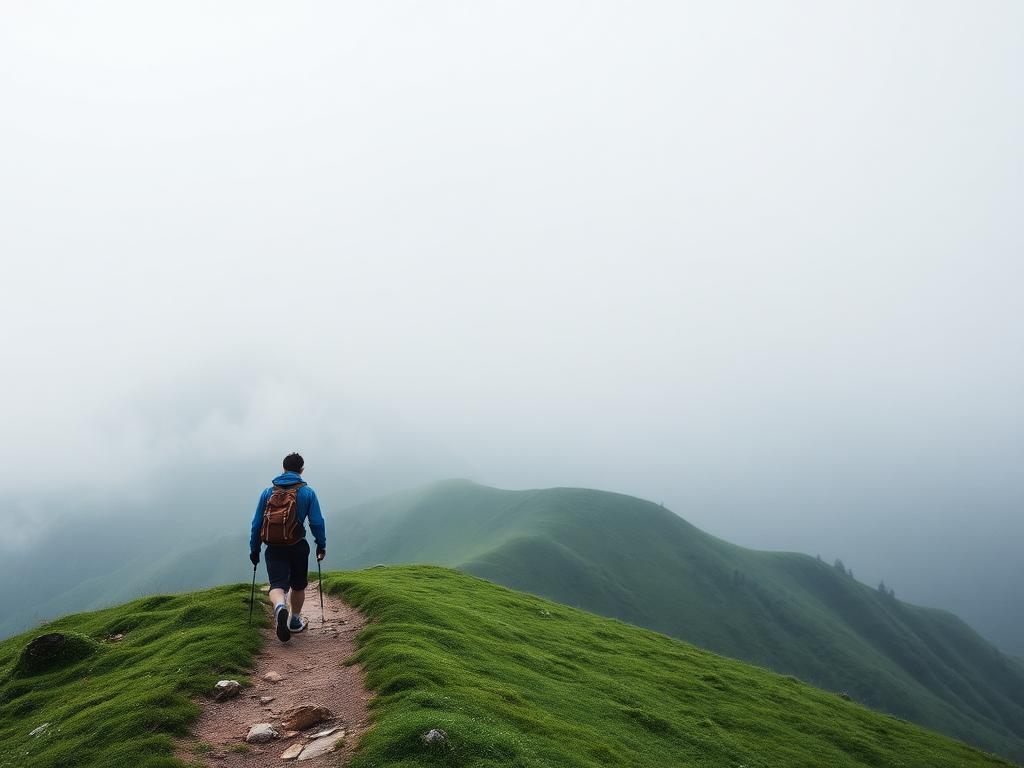
Task A — Spending time outdoors

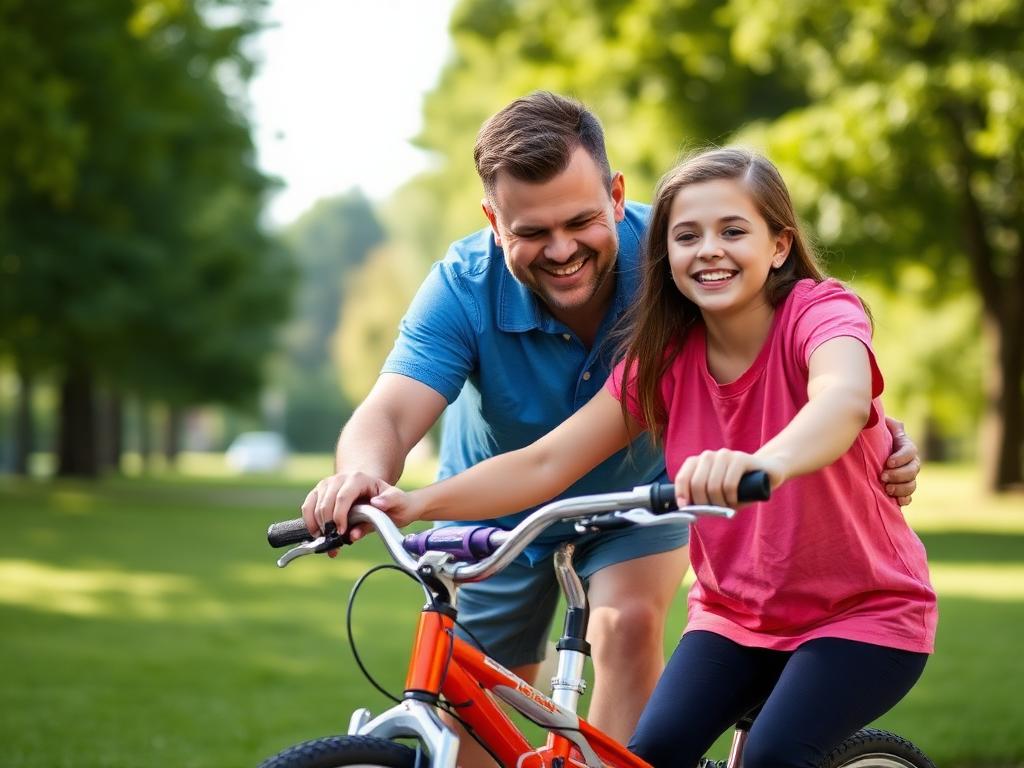
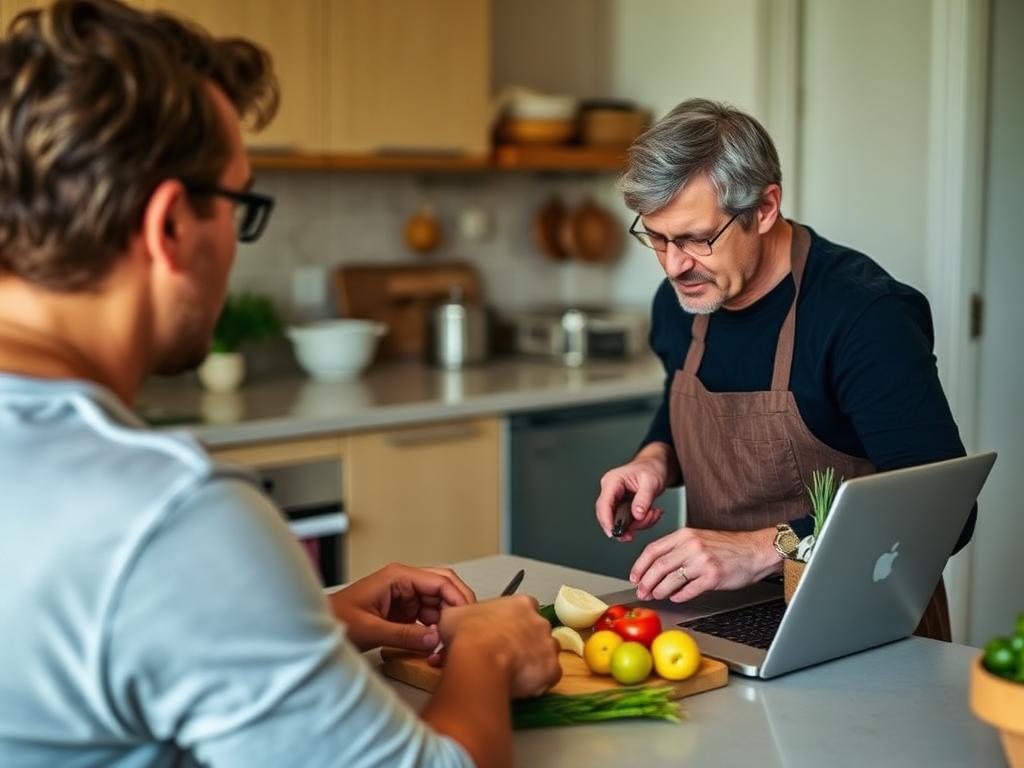
Task B — Learning something new
Task C — Shopping in different ways

- TASK A — Two photographs show people SPENDING TIME OUTDOORS in very different ways: a busy beach in summer and a quiet mountain hike. Compare the photographs and say why you think the people have chosen these places to spend their free time.
- TASK B — Two photographs show people LEARNING something new: a child learning to ride a bike with a parent, and an adult taking an online cookery class. Compare the photographs and say how the people might be feeling.
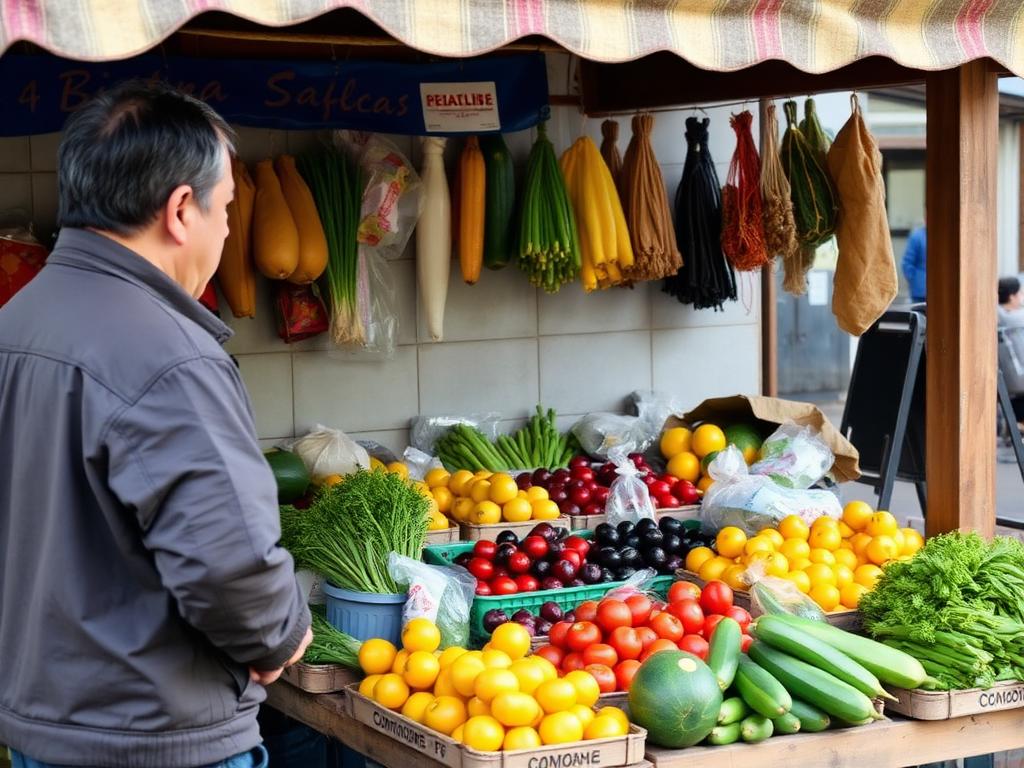
- TASK C — Two photographs show people SHOPPING in different ways: a busy supermarket on a Saturday and a small local market stall. Compare the photographs and say what the advantages of each kind of shopping might be.
Speculation bank — choose the certainty level
For each sentence, pick the phrase that matches the certainty level in brackets.
- The man in the first photo ___ be a tour guide. (HIGH certainty) A) might B) must C) could
- She ___ be enjoying herself — look at her face. (HIGH certainty negative) A) can't B) might not C) may not
- They ___ be on holiday, judging by their clothes. (MEDIUM certainty) A) must B) could C) can't
- It ___ as if the weather is about to change. (CAUTIOUS observation) A) looks B) must C) is
- The children ___ to be a bit nervous about the first day. (CAUTIOUS observation) A) must B) seem C) can
- He ___ well be a professional photographer. (MEDIUM-HIGH) A) could B) can C) must
Pair script — strict timing
Practise with a partner using this 1-minute + 30-second script.
Candidate A1 minute long turn on TASK A above.
Candidate B30-second follow-up answering 'Which of these would you prefer to do?'
Swap roles with TASK B. Use a phone stopwatch.
Spot the 4 moves — read & analyse
Read the sample candidate response. Label each move (1–4).
Transcript (read aloud)
[Candidate, 58 seconds] 'So, both pictures show people spending time together, but in very different ways. The first picture is of a big family gathering, maybe a birthday — lots of generations sitting around a long table. The second one shows just two friends having coffee in a quiet café. I'd say the family meal is much more formal and noisy, whereas the café scene feels really intimate and relaxed. The people might have chosen these moments for different reasons — the family probably wants to celebrate a special occasion together, while the friends just want to catch up properly. Personally, I think both are equally important, but I'd choose the quiet café — it's where the real conversations happen.'
Questions
- Mark in the transcript where each move starts:
- Move 1 — Frame both images
- Move 2 — Describe each one
- Move 3 — Compare + speculate
- Move 4 — Answer the question / personal choice
Recap · Section 13
2–3 minWhat you've learned
- FCE Speaking Part 2: 1 minute candidate + 30-second partner follow-up.
- Always use the 4-move frame: similarity → difference → speculation → personal answer.
- Compare and SPECULATE — do not just describe photo A then photo B.
- Use 'whereas', 'by contrast', 'looks as if', 'might', 'I'd imagine', 'personally'.
- Never stop early; never apologise — extend with one more speculation if needed.
Module 2 · Next step
Exam Review Lab 2 — The Language Lab
Team cloze races, word-formation challenges and photo-comparison rounds.
Lesson progress
This lesson completes automatically once you finish every activity, or when you continue to the next lesson.