

Module 7 · Grammar Precision · Lesson 28
Modals of Speculation
Master must/might/could/may/can't for speculating about present, past, and future situations — the exact language FCE Speaking Part 2 and 3 demand when you're asked to guess and compare, not just describe.
Get talking · Section 1
5 minLook around you right now. Guess what someone nearby might be doing, without asking them.
Compare: 'She's tired' vs 'She might be tired'. What's the difference in how sure you sound?
If a friend didn't reply to your messages all day, what are 3 possible explanations?
Grammar focus · Section 2
8–10 minSpeculating with modal verbs: present, past, and future
When we're not 100% sure about something, we use modal verbs to show how confident we are: must (very sure, positive), might/may/could (possible), can't (very sure, negative). The same logic works for the present, the past (+ have + past participle), and the future.
Quick Rule
must / might / could / may / can't + be (present) or + have + past participle (past)
Choose the modal based on how certain you are, then keep the same modal when speculating about the past — just add 'have + p.p.'.
When to Use
- Guessing about a present situation with indirect evidence
- Explaining a past event you didn't witness directly
- FCE Speaking Part 2 (comparing photos) and Part 3 (discussing options)
Pattern Builder
subject
She
modal
must
have + p.p.
have forgotten
object
her keys
Certainty scale
| Certainty | Present | Past |
|---|---|---|
| Very sure (positive) | must be | must have been |
| Possible | might/may/could be | might/may/could have been |
| Very sure (negative) | can't be | can't have been |
Common Mistake
Writing 'must has been' or 'must had been' instead of 'must have been' — the modal never changes form, and 'have' stays base form.
Memory Tip
Think traffic light: must = green (confident yes), might/could/may = amber (not sure), can't = red (confident no).
Natural English
He must be joking. She might have forgotten. That can't be right. They could still be on the train.
Examples
→ Present: She's not answering — she must be busy.
→ Present: He might be at the gym; I'm not sure.
→ Present: That can't be Tom — he's on holiday this week.
→ Past: The lights are off — they must have left already.
→ Past: She might have missed the bus.
→ Past: He can't have finished — the shop only opened an hour ago.
→ Future: Given the traffic, we might not arrive on time.
Word bank — no clues, retrieve it
Question 1.The car's gone — she ___ left already.
Question 2.That ___ be John — he's in Spain this week.
Question 3.I'm not sure, but he ___ be at work still.
Question 4.She looks exhausted — she ___ have slept well.
Question 5.Given the reviews, the film ___ be worth watching.
Build the sentence → spot the natural chunks → say it aloud → reply like a real conversation.
1.Rebuild the sentence — then say it aloud.
2.Rebuild the sentence — then say it aloud.
3.Rebuild the sentence — then say it aloud.
Quick check 1.'must' shows…
Quick check 2.Past speculation is formed with…
Quick check 3.'can't' in speculation means…
Vocabulary · Section 3
5–7 minWords & phrases to own
to speculate
to form a guess without complete evidence.
"Analysts are speculating about the cause of the delay."
Speculate about tomorrow's weather.
presumably
probably, as far as one can guess.
"He's not here yet — presumably stuck in traffic."
Say something using 'presumably'.
apparently
according to what one has heard, but not confirmed.
"Apparently, the shop is closing down."
Share a piece of gossip using 'apparently'.
evidence
facts/signs that support a belief.
"There's no evidence he was even there."
Describe evidence for a guess you'd make.
to assume
to accept something as true without proof.
"I assumed she knew, but she didn't."
Something you often assume about strangers.
likely / unlikely
probable / improbable.
"It's unlikely to rain today."
Predict something likely for this weekend.
conceivably
in a way that can be imagined or believed possible.
"It could conceivably take a whole week."
Use 'conceivably' in a guess.
rule out
to decide something is not possible.
"We can't rule out a delay."
Rule something out about your plans.
plausible
seeming reasonable or probable.
"That's a plausible explanation."
Give a plausible excuse (jokingly).
far-fetched
unlikely, hard to believe.
"His story sounded a bit far-fetched."
Describe a far-fetched theory you've heard.
Activate · use it within minutes
Complete each sentence with a plausible guess using the target word.
My neighbour hasn't left for work — (presumably)…
(Apparently) our teacher…
It's (unlikely) that…
We can't (rule out) the possibility that…
Tick each word as you use it
Describe a random object/scene and speculate about its story using must/might/can't have.
An abandoned suitcase at a station
A half-eaten meal left on a park bench
A ladder left against a house at night
Tick each word as you use it
Tap an item on the left, then tap its match on the right.
Pronunciation · Section 4
3–4 minWeak forms of 'have' in past modals
Say it aloud
- • 'must have' → /ˈmʌstəv/ — 'have' almost disappears.
- • 'might have' → /ˈmaɪtəv/, 'could have' → /ˈkʊdəv/.
- • Never write 'must of' — that's a spelling mistake based on the pronunciation, not real grammar.
- • Practise: 'She must've left. He might've called. They can't've known.'
Reading · Section 5
8–10 minThe detective's grammar: speculation modals in real use
Read the passageTap to openTap to hide
Good detectives — real or fictional — rarely state facts they haven't confirmed. Instead, they speculate with precision: 'The thief must have entered through the back window' sounds confident; 'The thief might have entered through the back window' sounds tentative; 'The thief can't have entered through the front door' rules something out entirely. This precise certainty scale, built entirely from modal verbs, is one of the most useful and most under-used tools at B2 level.
The mistake many learners make is flattening every guess into 'maybe' or 'I think'. 'Maybe she's at work' and 'She must be at work' communicate very different levels of confidence, yet learners often can't hear the difference themselves, because their own speech collapses everything into the same vague hedge. Examiners notice this immediately in Speaking Part 2 and Part 3, where candidates are explicitly asked to speculate about photographs and scenarios rather than describe known facts.
The grammar itself is refreshingly consistent. Whatever certainty level you choose for the present — must, might/may/could, or can't — carries over unchanged into the past simply by adding 'have + past participle'. 'He must be tired' becomes 'he must have been tired'; 'she might be lying' becomes 'she might have been lying'. The modal doesn't change form, which is precisely why writing 'must has' or 'must had' is always wrong — 'have' after a modal is always the bare infinitive.
Speaking Part 2 rewards this structure directly: candidates comparing two photographs are expected to speculate about what's happening, why, and how the people might be feeling — 'they might be waiting for a bus' or 'she could be explaining something to him' — rather than simply describing colours and objects. Similarly, Use of English regularly tests speculative modals in Part 1 (multiple-choice cloze) because a wrong modal choice completely changes the meaning of a sentence.
The habit worth building is simple: before saying 'maybe' or 'I think', pause and ask how confident you actually are. If you're very confident it's true, reach for 'must'. If you're very confident it's false, reach for 'can't'. Everything genuinely uncertain in between takes might, may, or could. This small shift makes speculation sound sharp, controlled, and exam-ready rather than vague.
For questions 1–5, choose the answer (A, B, C or D) which you think fits best according to the text.
1What mistake do many learners make with speculation, according to the passage?
2How does past speculation form compared to present?
3Why is 'must has been' always wrong?
4Which exam section does the passage say rewards speculation modals directly?
5The suggested habit before saying 'maybe' is to…
Sentences have been removed from the text. Choose from the sentences A–E the one which fits each gap (1–4). There is one extra sentence which you do not need to use.
Exam conditions: keep “Read the passage” closed while you do this task.
Listening · Section 6
8–10 minTwo colleagues speculate about a missing coworker
Listening audio
Tap play to listen. Drag the timeline to jump anywhere.
Show transcript
Ben:Has anyone seen Chloe today? Her desk's completely empty.
Amara:No idea. She might be working from home.
Ben:She usually messages the group chat if she's doing that, though.
Amara:True. She could have forgotten to tell us, I suppose.
Ben:Or maybe she's just running late — traffic's been terrible this morning.
Amara:That's possible, but it's almost eleven now. She can't still be stuck in traffic.
Ben:Good point. Do you think she might be ill?
Amara:It's possible — she did look a bit pale yesterday. She might have caught something.
Ben:Should we call her, just in case?
Amara:I already tried. It went straight to voicemail, so her phone must be off.
Ben:That's odd. She never turns her phone off.
Amara:Unless it just died — she might have forgotten to charge it last night.
Ben:Wait, didn't she mention a dentist appointment last week?
Amara:Actually, yes! She must have booked it for today and just forgotten to update the calendar.
Ben:That makes a lot more sense than her being ill or stuck in traffic.
Amara:Agreed. I bet she'll walk in any minute now, completely unaware we panicked about her.
Ben:Knowing Chloe, she'll probably have a very simple explanation for all of this.
Amara:Definitely. Let's just message her manager, in case it really is something urgent.
Question 1.What is Amara's first guess about Chloe?
Question 2.Why does Amara think Chloe can't still be in traffic?
Question 3.What happens when Amara calls Chloe?
Question 4.What do they eventually remember about Chloe?
Question 5.What do they decide to do at the end?
Question 1.Which modal best matches Amara's final theory about the dentist appointment?
Exam skills · Section 7
5 minFCE Speaking Part 2 — Comparing photographs with speculation language
🎯 Speculating about photos
In Speaking Part 2, you compare two photos for about 1 minute and speculate about what you can't be sure of — don't just describe.
- Briefly compare the photos, then spend most of your time speculating about feelings/reasons
- Use a range of modals: must be, might be, could be, may be, can't be
- Answer the examiner's specific question directly, don't just describe everything you see
- Keep talking for the full minute — silence loses marks even if grammar is perfect
Try the FCE Speaking Part 2 task in FCE Exam Practice below using the two photos provided.
Quick Tip
Use a simple frame: 'Both photos show…, but in the first… whereas in the second…' then move into speculation.
Exam Hack
If you don't know a word for something in the photo, speculate around it instead of stopping — 'some sort of equipment, maybe for…'
Common Mistake
Don't just list objects you see — examiners want interpretation and speculation, not an inventory.
Your task
Practise a 1-minute long turn comparing the two photos in FCE Exam Practice below.
Example
Both photos show people outdoors, but the situations seem quite different. In the first, the woman might be waiting for someone, whereas in the second, they could be celebrating something together.
Practice · Section 8
8–10 minFill in the blank
Question 1.She's not picking up — she ___ be busy.
Question 2.That ___ be Dan — he moved abroad years ago.
Question 3.He looks exhausted — he ___ have slept badly.
Question 4.They're late — they ___ have missed the train.
Question 5.Given the forecast, it ___ rain later.
Q1.Modal showing very strong positive certainty:
Q2.Modal showing very strong negative certainty:
Q3.Past speculation formula: modal + ___ + past participle
Writing · Section 9
5 minPut it in writing
Your task
Write a short paragraph (80–100 words) speculating about an unsolved mystery (a missing object, an unexplained event) using at least 4 different speculation modals.
Show model answer
Nobody knows exactly what happened to the old clock in the town hall. Some say it must have stopped during the storm in 1987, though nobody can prove it. Others insist it might have been sabotaged, though that seems far-fetched. It can't have simply broken by accident — clocks like that were built to last centuries. Whatever happened, the mystery could have been solved decades ago if anyone had bothered to open the mechanism, but by now, we may never know the truth.
Speaking · Section 10
10–15 minMake it a real conversation
Roleplay
1:1 online roleplay. Teacher describes a strange or ambiguous situation (a locked door, an unanswered phone, an empty desk); student must speculate about at least 3 possible explanations using different modals.
Useful phrases
- • It must be because…
- • It might have been…
- • There's no way it could be… because…
- • It can't have been… since…
- • I'd guess it's probably…
- AWhy do you think the shop is closed today?
- B_______________
- AWhere do you think she went after the meeting?
- B_______________
Teacher notes
Optional · Teacher-led
Teacher Activities
Two fast drills that build automaticity choosing the right speculation modal under time pressure. ~14 min total
FCE Exam Practice · Section 11
20–30 minReal FCE tasks
Cambridge B2 First · Speaking Part 2 and Use of English Part 4. Complete both tasks below.


Examiner asks
"Here are your photographs. They show people in different situations. I'd like you to compare the photographs and say what you think the people might be feeling, and why."
Comparative frame
- Both photos show… but the situations seem quite different.
- In the first photo, the person might be… whereas in the second, they could be…
- They must be feeling… because…
- I think the biggest difference is…
After 1 minute, examiner asks your partner
"Which situation would you prefer to be in, and why?" (~30 seconds)
Useful language
- • must be feeling / might be feeling / could be feeling
- • It looks as if… / It seems like…
- • Unlike the first photo, in the second…
- • I imagine that… / I'd guess that…
Sample long-turn answer
Both photos show people outdoors, but the atmosphere is really different. In the first photo, the person seems to be waiting for someone — she keeps checking her watch, so she might be worried about being late, or perhaps the other person hasn't turned up yet. She could be feeling a bit anxious or bored. In the second photo, the group must be celebrating something, maybe a birthday or a graduation, because everyone looks really happy and relaxed. I think the key difference is that waiting alone can feel quite tense, whereas celebrating with others feels much more relaxed and joyful.
1.I'm sure he forgot the meeting.
MUSTHe
2.I'm sure it wasn't Sarah who called.
CAN'TIt
3.Perhaps they missed the last bus.
MIGHTThey
4.I'm sure she's still asleep.
MUSTShe
5.It's impossible that he's the manager.
CAN'THe
6.Perhaps she has already left the office.
MAYShe
Homework · Section 12
Take-homeTake it home
Speculation transformation set
Rewrite each sentence as a speculation using the modal given, keeping the timeframe (present/past) correct.
Watch for present vs past forms carefully.
- I'm sure he's at work. (must)
- I'm sure she didn't see the message. (can't)
- Perhaps they missed the flight. (might)
- I'm sure it wasn't him — he was with me. (can't)
- Perhaps she's forgotten our meeting. (may)
- I'm sure they've already left. (must)
Speculate about 3 photos
Record yourself speculating about each of the three photos below, using at least 2 modals per photo.
Vary your modalsmust, might, could, may, can't. Speculate about feelings and reasons, not just objects.
Photo 1 — What's the situation? How does she feel?
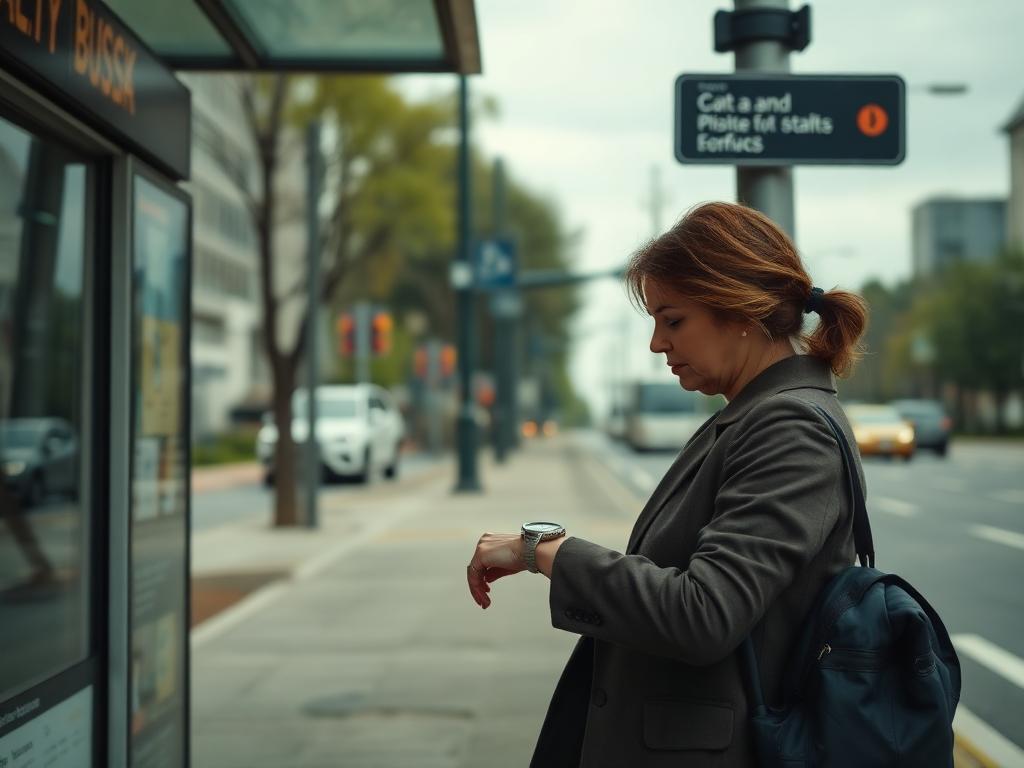
Photo 2 — What are they celebrating? Why?

Photo 3 — What has just happened? How is he feeling?

- Photo 1 speculation
- Photo 2 speculation
- Photo 3 speculation
Recap · Section 13
2–3 minWhat you've learned
- Speculation modals form a certainty scale: must (confident yes), might/may/could (uncertain), can't (confident no).
- Past speculation = same modal + have + past participle (never changes form).
- 'Must has/had' is always wrong — 'have' after a modal is the bare infinitive.
- Speaking Part 2 rewards speculation over simple description.
- Precise modals sound sharper and more exam-ready than vague 'maybe'/'I think'.
Module 7 · Next step
Exam Review Lab 7 — The Witness Room
Witness role-play — report, hypothesise, describe and speculate.
Lesson progress
This lesson completes automatically once you finish every activity, or when you continue to the next lesson.