
Module 6 · Vocabulary in Depth · Lesson 24
Listening Part 4
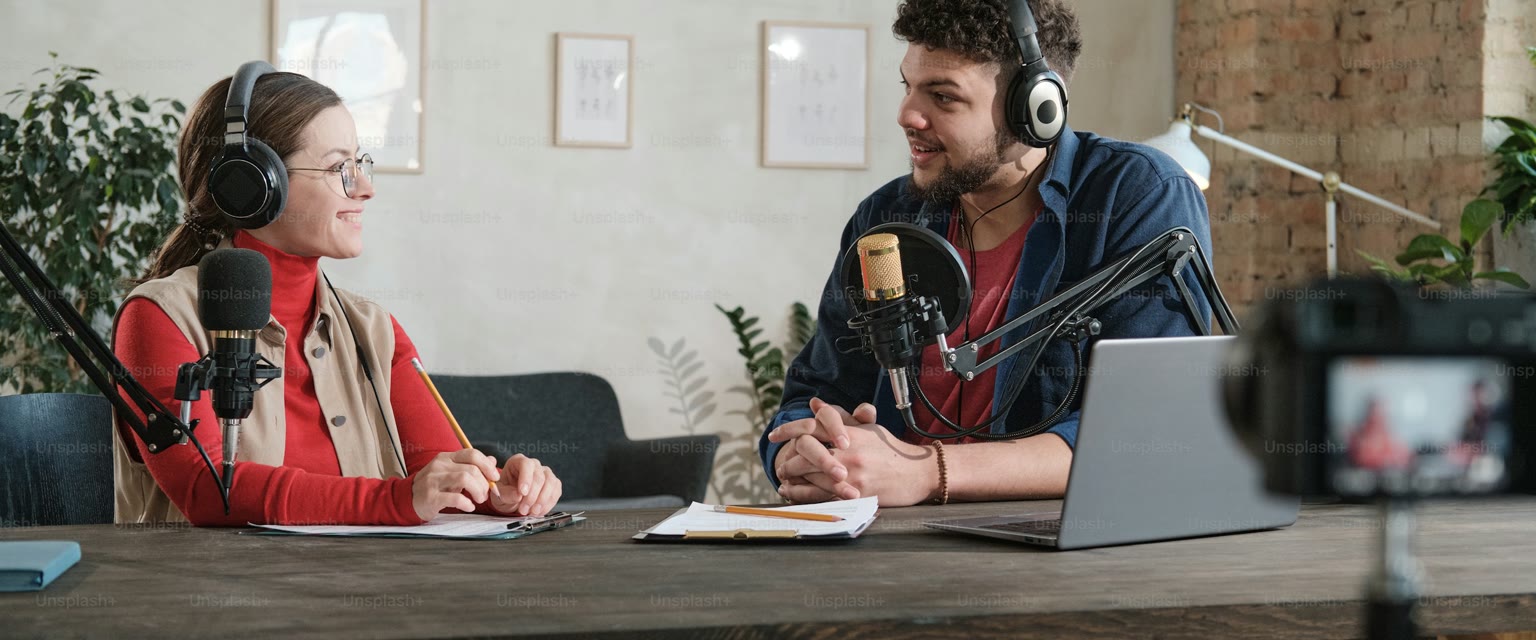
FCE Listening Part 4 is a 3-minute interview or conversation tested with seven three-option multiple-choice questions. Train the skill of tracking opinion, attitude and detail across a long, natural-paced extract.
Get talking · Section 1
5 minIf an interviewer asks 'How did you feel when you won?', is the answer more likely to test FACT or OPINION/ATTITUDE?
In pairs: why is a 3-minute interview harder to answer correctly than a 30-second extract, even though you hear it twice?
An interviewee says 'I used to think that, but now I realise...' — which idea is the correct answer: the first thought or the current one?
Grammar focus · Section 2
8–10 minTracking attitude and opinion across a long interview
Listening Part 4 tests whether you can follow a speaker's OPINION and ATTITUDE — not just facts — over 3 minutes. Questions often hinge on words like 'but', 'although' and 'actually', which signal a change of mind mid-answer.
Quick Rule
When you hear 'but / although / actually / to be honest', the answer is almost always what comes AFTER that word, not before.
When to Use
- Use first listening for gist + eliminating one wrong option per question
- Use second listening to confirm exact wording and attitude
- Watch for two speakers with different opinions on the same topic
Pattern Builder
Initial view
I thought it'd be easy...
Signal word
but / actually
True view
...it was really tough
Fact questions vs opinion/attitude questions
| Feature | Fact question | Opinion/attitude question |
|---|---|---|
| What it tests | A specific detail (date, number, reason) | How the speaker feels/thinks |
| Listen for | Precise nouns, numbers, names | Feeling words, qualifiers, tone |
| Common trap | A similar-sounding but wrong detail | The FIRST opinion mentioned, before it changes |
Common Mistake
Choosing the FIRST opinion a speaker states, before they say 'but' and change or qualify it.
Memory Tip
Think 'BUT beats first' — whatever comes after 'but/although/actually' usually beats the opinion stated before it.
Natural English
Native speakers often soften a real opinion with 'to be honest' or 'actually' right before saying what they truly think — this is a strong signal cue, not a filler.
Examples
→ Changed-mind pattern: 'I thought the course would be too easy, but actually it was really challenging.' → correct answer: challenging, NOT easy.
→ Attitude question: 'How does she feel about moving abroad?' — listen for feeling words (nervous, excited, reluctant), not just facts.
→ Distractor trap: question mentions 'budget'; one option repeats 'budget' but attaches the wrong reason.
→ Qualifying word: 'To be honest, I wasn't sure at first' signals the speaker's TRUE opinion is coming next.
→ Two-speaker tracking: note who says what — Part 4 sometimes has an interviewer AND an interviewee with different opinions.
Word bank — no clues, retrieve it
Question 1.In Part 4, the correct answer after 'but' usually is...
Question 2.How many speakers are typically in a Part 4 extract?
Question 3.What should you do on the FIRST listening?
Question 4.Which phrase signals the speaker's true opinion is about to follow?
Question 5.What is a common distractor trap?
Quick check 1.What kind of questions mix with fact questions in Part 4?
Quick check 2.What is the 'changed-mind pattern'?
Quick check 3.What should the second listening confirm?
Vocabulary · Section 3
5–7 minWords & phrases to own
to be honest
phrase signalling the speaker's real/true opinion is coming.
"To be honest, I was terrified before the interview."
Use this phrase to admit a true opinion about exams.
to change one's mind
to decide differently from before.
"I changed my mind about quitting after talking to my mentor."
When did you last change your mind about something?
reluctant (to do something)
unwilling or hesitant.
"She was reluctant to move abroad at first."
Name something you're reluctant to do.
to come round to (an idea)
to gradually start agreeing with something.
"He eventually came round to the idea of remote work."
What idea have you come round to recently?
mixed feelings
a combination of positive and negative emotions about something.
"I have mixed feelings about the promotion — excited but nervous."
Describe something you have mixed feelings about.
to have second thoughts
to begin to doubt a decision already made.
"I'm having second thoughts about the new job offer."
Have you ever had second thoughts about a big decision?
overwhelming
so intense it's hard to manage or cope with.
"The support from fans was overwhelming after the win."
Describe a time you felt overwhelmed.
to look back on (something)
to think about a past event or period.
"Looking back on my first job, I learned a lot from the mistakes."
What do you look back on fondly?
a turning point
a moment when a significant change begins.
"Meeting my mentor was a real turning point in my career."
Describe a turning point in your life.
to take something in your stride
to deal with a difficulty calmly, without being upset.
"She took the criticism in her stride and kept working."
Name something you had to take in your stride recently.
genuinely
truly, sincerely.
"I was genuinely surprised by how well it went."
What genuinely surprised you recently?
to strike a balance
to find a satisfactory compromise between two things.
"It's hard to strike a balance between work and family life."
What balance do you try to strike in daily life?
Activate · use it within minutes
Complete each sentence with a suitable phrase from today's list.
___, I didn't expect to enjoy the course at all.
I had ___ about accepting the job, but I'm glad I did.
Meeting her was a real ___ in my career.
It's hard to ___ between studying and relaxing.
Answer this question aloud, deliberately changing your mind mid-answer using 'but' or 'actually': 'What did you think of your first day at school/work?'
Structure: initial view + but/actually + true view.
Tick each word as you use it
Tap an item on the left, then tap its match on the right.
Pronunciation · Section 4
3–4 minStress on contrast/signal words in spoken opinions
Say it aloud
- • Say: 'I thought it would be boring, BUT / actually it was fantastic.' — stress 'but' and pause slightly.
- • Practise: 'To be HONEST, I wasn't sure at first.' — stress 'honest'.
- • Drill: 'I had SECOND thoughts, but I'm glad I went ahead.'
- • Read aloud with a clear pitch drop on the true opinion: 'Actually, it turned out to be the best decision I've made.'
- • Contrast two readings of the same sentence — flat (no stress) vs natural (stressed 'but') — notice how much clearer the second sounds.
Reading · Section 5
8–10 minWhy Part 4 is a test of stamina and attitude-tracking
Read the passageTap to openTap to hide
Cambridge B2 First Listening Part 4 presents candidates with their longest single extract of the paper: roughly three minutes of natural, largely unscripted-sounding speech, usually an interview between a host and a guest, occasionally a conversation between two people who know each other. Unlike Parts 1 and 3, where each short extract carries one clear piece of information, Part 4 requires sustained attention across a genuinely developing conversation — and this shift in format is exactly what makes it feel harder, even though the language itself is not more difficult.
The seven multiple-choice questions blend two types. Factual questions ask about concrete details: what happened, when, why. Attitude and opinion questions ask how a speaker feels about something, or what they genuinely think, which requires tracking emotional and evaluative language across several sentences rather than a single fact. This second type is where most marks are lost, because natural speech rarely delivers an opinion cleanly in one sentence. Speakers think aloud, qualify themselves, and often reverse an initial statement — 'I assumed it would be a disaster, but actually it went really smoothly' — and the exam question is built precisely around that reversal.
The most reliable strategy candidates can adopt is treating the two listenings as different jobs. On the first pass, the goal is not to answer every question with certainty but to build a mental map of the conversation's shape: who holds which opinion, and roughly where in the recording each question's topic comes up. Weaker candidates try to lock in a final answer immediately and then feel thrown when a later sentence contradicts their first guess — but that later sentence is very often the intended, correct answer.
On the second listening, attention should narrow specifically onto contrast markers: 'but', 'although', 'however', 'actually', 'to be honest'. In almost every case, whatever follows one of these words represents the speaker's true, settled opinion, and it is this — not the sentiment stated earlier — that the multiple-choice options are testing. Training the ear to catch these small function words, and to treat them as flashing signals rather than throwaway fillers, converts Part 4 from a stamina test into a pattern-recognition exercise.
For questions 1–5, choose the answer (A, B, C or D) which you think fits best according to the text.
1What makes Part 4 feel harder than Parts 1 and 3, according to the passage?
2Where does the passage say most marks are lost?
3What mistake do weaker candidates make on the first listening?
4What should the second listening focus on?
5According to the passage, what does training the ear for contrast markers achieve?
Sentences have been removed from the text. Choose from the sentences A–E the one which fits each gap (1–4). There is one extra sentence which you do not need to use.
Exam conditions: keep “Read the passage” closed while you do this task.
Listening · Section 6
8–10 minInterview with a chef about opening her first restaurant
Listening audio
Tap play to listen. Drag the timeline to jump anywhere.
Show transcript
Interviewer (Rachel):Today we're talking to chef Isabelle Novak about opening her first restaurant. Isabelle, thanks for joining us.
Isabelle:Thanks for having me, Rachel. It's been quite a journey.
Rachel:Let's start at the beginning. What made you want to open your own place?
Isabelle:Honestly, for years I thought I'd be happy just working as a head chef for someone else. But after ten years in other people's kitchens, I realised I wanted creative control over the whole menu, not just a few dishes.
Rachel:And how did you feel in the months before opening?
Isabelle:Terrified, if I'm honest. I assumed the paperwork and licensing would be the easy part and the cooking would be the challenge. Actually, it was the complete opposite — the food side came naturally, but the admin nearly broke me.
Rachel:That's surprising. What was the hardest part of the admin side?
Isabelle:Dealing with suppliers, mainly. I had assumed one good supplier would cover everything, but I ended up needing relationships with about six different ones just for fresh produce.
Rachel:Let's talk about the menu itself. How did you decide what to serve?
Isabelle:At first I wanted a huge, ambitious menu to show off everything I could do. My business partner talked me out of that pretty quickly, and I'm grateful he did — we launched with just twelve dishes, and it made the kitchen far more manageable.
Rachel:Do you ever regret starting with such a small menu?
Isabelle:Not at all, actually. If anything, customers loved that everything on it was done really well, rather than having thirty average dishes.
Rachel:How about the reviews so far? How have you found the critics?
Isabelle:Mixed, to be honest. The food reviews have been excellent, but a couple of critics mentioned the service was a bit slow on busy nights. We've since hired two more staff, and that's improved a lot.
Rachel:Looking back now, is there anything you'd do differently?
Isabelle:I'd have hired the extra staff from day one rather than waiting for complaints. Other than that, I genuinely wouldn't change much — the small menu, the location, all of it turned out right.
Rachel:Finally, what advice would you give someone thinking of opening their first restaurant?
Isabelle:Don't underestimate the admin — budget three times as much time for it as you think you'll need. And trust your instincts on the menu; smaller and better beats bigger and average every time.
Rachel:Isabelle, thank you so much for sharing all that.
Isabelle:Thank you, Rachel — it's been a pleasure.
Question 1.Why did Isabelle decide to open her own restaurant?
Question 2.What did Isabelle find harder than expected before opening?
Question 3.How many suppliers did Isabelle end up needing for fresh produce?
Question 4.Who persuaded Isabelle to launch with a smaller menu?
Question 5.How does Isabelle feel about starting with a small menu?
Question 6.What did some critics say about the restaurant?
Question 7.What would Isabelle do differently if she could?
Question 1.Which phrase does Isabelle use to introduce her TRUE feeling before opening the restaurant?
Exam skills · Section 7
5 minListening Part 4 — long interview, multiple choice
🎯 Track the shift, not just the first answer
Use listening 1 for the map of opinions, listening 2 to confirm exact wording after contrast markers.
- Read all 7 questions and options BEFORE the recording starts
- First listening: identify roughly where each question's topic appears and eliminate one wrong option
- Second listening: confirm the answer, especially anything after 'but/although/actually/to be honest'
- Don't panic if two speakers disagree — track WHO says WHAT
Open the FCE Exam Practice block below for a full Listening Part 4 task with 7 questions.
Quick Tip
Underline the key word in each question stem before listening — this tells you what to listen FOR.
Exam Hack
If an option seems too obvious in the first ten seconds of a speaker's answer, wait — Part 4 answers are usually revealed AFTER a contrast word.
Common Mistake
Don't select the first opinion a speaker states without waiting to hear if they say 'but' or 'actually' afterwards.
Your task
Complete the Listening Part 4 practice below using both listenings strategically.
Example
Question: 'How does Isabelle feel about the small menu?' She says 'At first I wanted a huge menu... Not at all, actually [do I regret it]... customers loved that everything was done really well.' The correct answer is her FINAL, settled view — pleased, not regretful.
Practice · Section 8
8–10 minFill in the blank
Question 1.___, I didn't expect the admin to be harder than the cooking.
Question 2.I assumed it would be simple, ___ it turned out to be much harder.
Question 3.Reviews have been ___ — some great, some critical.
Question 4.Meeting my business partner was a real ___ in my career.
Question 5.She took the criticism in her ___ and kept working.
Q1.Phrase signalling a speaker's true opinion is about to follow (3 words):
Q2.Phrase meaning 'to begin doubting a decision already made' (3 words):
Q3.Word meaning 'a combination of positive and negative emotions' (2 words):
Writing · Section 9
5 minPut it in writing
Your task
Write a 130-word summary of Isabelle's interview, focusing on how her expectations CHANGED once the restaurant opened. Use at least three phrases: 'to be honest', 'a turning point', 'mixed feelings'.
Show model answer
Before opening her restaurant, Isabelle assumed the cooking would be the biggest challenge and the admin would be simple. To be honest, the opposite happened — the paperwork and supplier relationships nearly overwhelmed her, while the food side came naturally. A real turning point was her business partner convincing her to launch with a small, twelve-dish menu instead of an ambitious one; she now has no regrets about that decision, since customers praised the consistent quality. Reviews so far have been mixed feelings for Isabelle: the food has been praised, but early service was criticised as slow, a problem she has since fixed by hiring more staff. Looking back, she says she would only change the timing of her hiring decisions.
Speaking · Section 10
10–15 minMake it a real conversation
Roleplay
1:1 online task. Teacher plays interviewer, student plays interviewee describing a personal project/achievement. Student must deliberately include one 'changed-mind' answer using 'but' or 'actually'.
Useful phrases
- • To be honest, at first I thought...
- • But actually, it turned out...
- • Looking back, I have mixed feelings about...
- • It was a real turning point when...
- • I had second thoughts about... but I'm glad I continued.
- InterviewerHow did you feel before your first day at the new job?
- Candidate_______________
- InterviewerAnd now, looking back, how do you feel about the decision to take the job?
- Candidate_______________
Teacher notes
Optional · Teacher-led
Teacher Activities
Two fast 1:1 drills that train contrast-marker recognition and sustained listening stamina. ~16 min total
FCE Exam Practice · Section 11
20–30 minReal FCE tasks
Cambridge B2 First · Listening · Part 4 · Long interview, multiple choice. An authentic interview extract with 7 three-option questions and full Teacher Mode commentary.
You will hear an interview with Danielle Osei, a runner, talking about completing her first ultramarathon.
Tap play to listen. Drag the timeline to jump anywhere.
1.Why did Danielle originally sign up for the ultramarathon?
2.What did Danielle find harder than expected during training?
3.What happened when Danielle got a knee injury?
4.How did Danielle feel at the start line?
5.What helped Danielle get through her low point at 30 miles?
6.How did Danielle feel crossing the finish line?
7.What would Danielle do differently next time?
Show transcript
Interviewer (Tom): Danielle, you recently completed your first ultramarathon. What made you decide to sign up?
Danielle: Honestly, a friend signed up first and I thought I'd just keep her company for the training runs. But after a few weeks, I was genuinely hooked myself and decided to enter properly.
Tom: How did the training go?
Danielle: I assumed the physical side would be the hardest part. Actually, the mental side was far tougher — running for six hours alone tests your head more than your legs.
Tom: Did you have any setbacks along the way?
Danielle: I picked up a knee injury about halfway through training and had to have second thoughts about whether to continue at all. My physio talked me through some adjustments, and I managed to keep going, just with a lighter schedule.
Tom: What about race day itself — how did you feel at the start line?
Danielle: Terrified, if I'm honest. But once the race started, that nervous energy actually turned into focus, and I settled into a rhythm pretty quickly.
Tom: Was there a point during the race that stands out?
Danielle: Around the 30-mile mark I hit a real low, both physically and mentally. I thought about quitting. But a stranger running near me struck up a conversation, and that distraction got me through it — it was a real turning point in the race.
Tom: How did you feel crossing the finish line?
Danielle: Overwhelming, honestly — more emotional than I expected. I'd assumed I'd just feel relief, but it was much bigger than that.
Tom: Looking back now, would you do another one?
Danielle: Definitely, though I'd train differently next time — more mental preparation, not just physical.
Homework · Section 12
Take-homeTake it home
Contrast-marker hunt
Re-read the interview transcript and highlight every contrast marker ('but', 'actually', 'to be honest', 'although'). For each one, write the opinion BEFORE and the true opinion AFTER.
Transcript (read aloud)
Interviewer (Rachel): Today we're talking to chef Isabelle Novak about opening her first restaurant... (full transcript as in Listening Script above)
- Marker 1: ... before → ... after →
- Marker 2: ... before → ... after →
- Marker 3: ... before → ... after →
- Marker 4: ... before → ... after →
Record your own changed-mind answer
Record a 60-second spoken answer to: 'Tell us about a decision you made that you weren't sure about at first.' Include at least one clear contrast marker.
Self-contained: no external book required.
Recap · Section 13
2–3 minWhat you've learned
- Listening Part 4 is one long interview/conversation (~3 minutes) with 7 multiple-choice questions.
- Questions mix FACTS with OPINION/ATTITUDE — the second type is where most marks are lost.
- The correct answer is almost always what comes AFTER 'but/although/actually/to be honest', not before.
- Use listening 1 to map the conversation's shape; use listening 2 to confirm exact wording.
- Watch for two speakers with different opinions — track WHO says WHAT.
- Never leave a question blank — eliminate at least one option even under time pressure.
Module 6 · Next step
Exam Review Lab 6 — The Word Bank
Collocation auctions, phrasal-verb stories and a listening relay.
Lesson progress
This lesson completes automatically once you finish every activity, or when you continue to the next lesson.